

2025 Crypto Basis Rules: How to Minimize Capital Gains
The IRS has drastically changed how crypto cost basis is calculated for 2025 and forward. Since basis is now calculated on a wallet-by-wallet approach, taxpayers will nee...
Answers to your crypto tax questions along with regulatory updates.
The IRS has drastically changed how crypto cost basis is calculated for 2025 and forward. Since basis is now calculated on a wallet-by-wallet approach, taxpayers will nee...

The IRS is no longer allowing taxpayers to use the “universal” wallet approach starting in 2025. This is the method basically every crypto tax software has used historica...

The IRS has finally issued guidance on staking income. They state that cash-basis taxpayers must report the staking rewards when they have gained full dominion and contro...

The IRS has finally broken its silence on the taxation of nonfungible tokens (NFTs) – at least partially. Notice 2023-27 gives us some indication of how the IRS views NFT...

The IRS has stated that a decline in the value of a cryptocurrency or NFT does not qualify as a loss under IRC section 165. Actually disposing of the asset will be requir...

Qualified appraisals are required for any donation of cryptocurrency exceeding $5,000. The IRS also noted that if a taxpayer failed to obtain an appraisal, they would not...

There is no clear consensus on whether or not crypto investors are able to take casualty or theft losses for funds held on defunct crypto exchanges. Many experts say it i...

Last year we wrote a series of articles talking about the Jarrett v. U.S lawsuit and its implications for the taxability of staking income. The first talked about the cor...

Crypto investors are likely to get tax write-offs from assets held on insolvent exchanges, but they are probably going to have to wait a while. Exchanges simply freezing ...

Accelerating and increasing your income can be a good strategy during a bear market. You will pay the taxes sooner, but it may save you significantly in the long run. Pay...

Most people aren’t making a ton of money in crypto right now. The market is down substantially and a lot of people – especially those who got involved in crypto more rece...

Wrapping Bitcoin and other tokens allows them to be used on different networks. Is the act of wrapping and unwrapping these tokens taxable? Some experts say yes and some ...

The best crypto accounting method will depend on the type of investor. It will also vary based on overall market conditions. FIFO can be helpful for long-term investors b...

The IRS has not issued any guidance on the taxation of liquidity pools. That said, there are a few prevailing theories on whether or not the entry into and exit out of th...

Is it a good idea to invest in play-to-earn (P2E) games? In a previous article, we talked about the need to cash out a percentage of your profits in real time. And we gav...

Stablecoins are not currency. While they are an important part of blockchain’s development and can be a component of your crypto investing strategy, they are anything but...

Taking profits and setting aside a percentage of that income is one of the most important things you can do as part of your crypto tax planning. It’s simple (and often ig...

High interest DAOs are horribly tax inefficient. Wrapping the token helps correct this, although it is unclear if this method will hold up to IRS scrutiny in the future. ...

A while back we wrote about the Jarrett v. USA case and how it will affect the taxation of staking income. The Jarrett Case’s Importance for Staking On December 20, 2021 ...

In general, rewards received from crypto credit and debit cards are not taxable. They are considered a reduction in purchase price, not income. However, promotional amoun...

Crypto Tax CPA explains the benefits and risks of using crypto cards.

Node operators will most often be taxed the same way as crypto miners. But there are situations where their rewards could be taxed as regular staking income. Node Income ...

A few months ago, we discussed how staking rewards are currently taxed. In that article, we noted that under current IRS guidance we can discern that: Staking rewards are...

You are able to write off worthless crypto and NFTs if you can show you have permanently discarded them. The simplest way to do this is usually to send them to a null add...

Before reading this article, we suggest first reading our previous articles on NFTs and P2E gaming. While they’re of course different topics, several of the concepts in t...

Rewards from blockchain games are likely taxable – either as hobby income or as business income. Making Money Just by Gaming We’re going to take a break from talking abou...

Gaming NFTs vs. Art NFTs In our last article we discussed how digital art NFTs are taxed. Some of those principles will be true for gaming NFTs as well: If you are the or...

In our last article on NFTs we noted how the different use cases for various NFTs may affect how they are taxed. NFTs that have a hard utility (such as usable items in ga...

At this point there has not been any NFT-specific guidance issued by the IRS. Their taxation will vary based on future guidance and likely the use case for each specific ...

It is very unlikely that crypto investors will qualify for “Trader Tax Status” (TTS) on their tax returns, although it is not impossible. Day Trading and Professional Tra...

Update: since we originally posted this article, the crypto market has shifted considerably. Celsius and Voyager have both stopped allowing withdrawals and other exchange...

Tokens received from hard forks are taxable income if a new token is received as a result of the hard fork. Hard Fork Taxation We largely covered this topic in our articl...
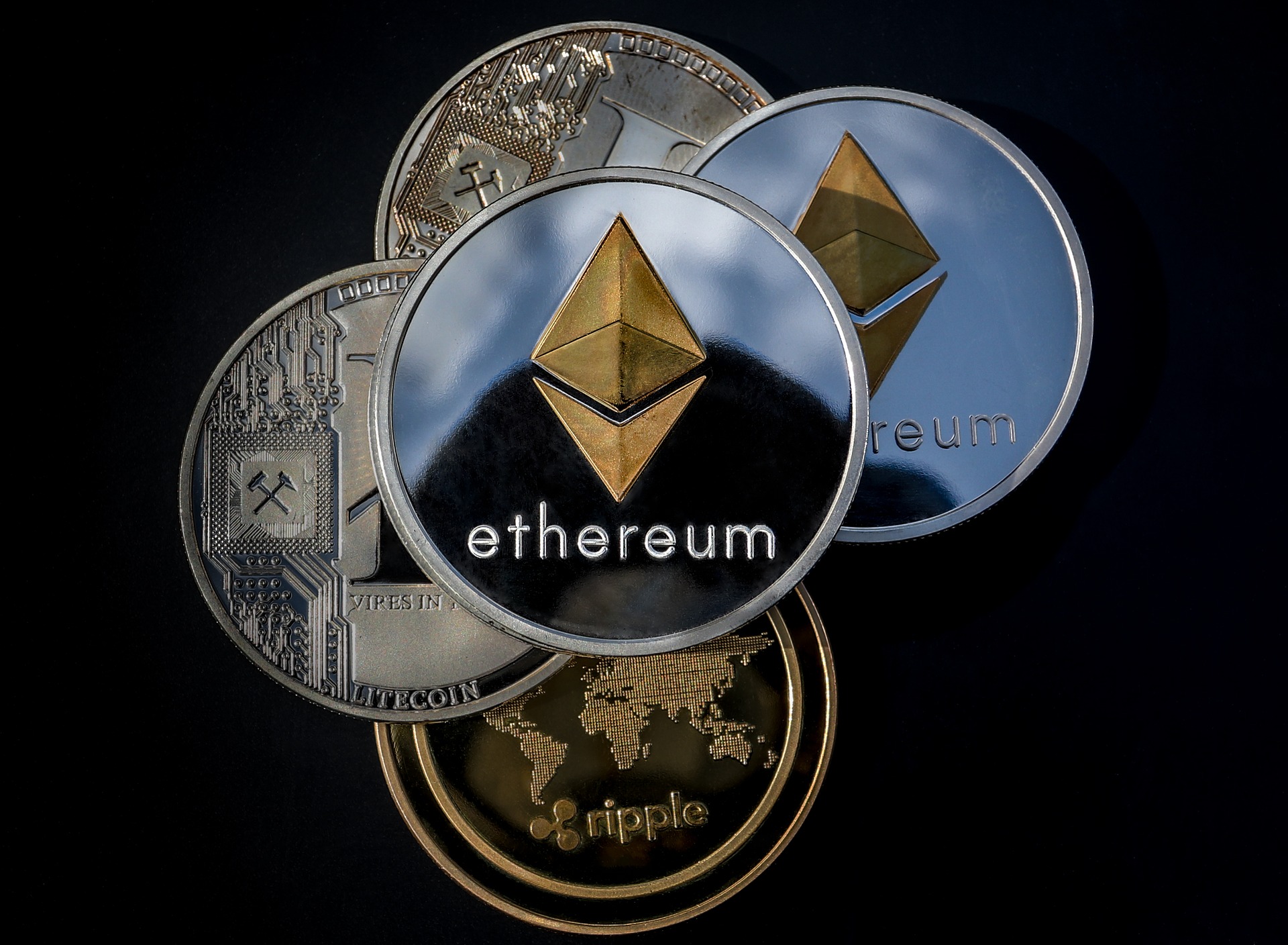
No, cryptocurrencies are not considered “like-kind” property and do not qualify for Section 1031 exchanges. Intangible Assets Ineligible for 1031s Post-TJCA If you’ve rea...

As you’ve likely seen if you’ve read our other articles, dealing with cryptocurrency taxes can be a nightmare. Almost every transaction is reportable in some form or fash...

Currently, holding cryptocurrency does not require you file an FBAR filing on a FinCEN 114. Similarly, it also does not require a Form 8938. But like most things crypto, ...

The majority of cryptocurrency activity will result in some sort of reportable transaction. This can cause difficulties both if you’re trading on a larger centralized exc...

Selling vs. “Selling” For traditional investments there is something called the “Wash Sale Rule”. It states that if you sell a stock at a loss but then buy an identical (...

Yes, airdrops are taxable income. Actual IRS Guidance on Airdrops Somewhat surprisingly, the IRS has issued specific guidance with respect to airdrops. As we’ve noted pre...

Yes, interest earned on crypto is taxable income. Crypto Interest Taxation This is true regardless of where it is held. The most common scenarios we run into: Through sho...

In this article we are going to be speaking specifically for people who hold proof-of-stake (PoS) tokens as delegators, not those who are operating full-blown nodes as va...

Not all crypto is taxed the same way. Each category of cryptocurrency income has its own rules that must be followed. These different types of blockchain income are all t...

As we’ve noted before, each time you trade one crypto token for another a capital gain or loss is created. And you need to report that income on your tax return – regardl...

In crypto circles, one of the most common sentiments is that crypto trading and profits are not taxable until you convert them back into a fiat currency. “Yeah, but you d...

If you’ve recently purchased a Gala Games node, you may be wondering how these earnings will be taxed. And if you aren’t, you should be. Not fully understanding how crypt...